In March 2026, the city's Historic Preservation Advisory Board took up a case at 1105 W Lamar Street. Staff presented the application, the board asked its questions, and the vote came back 7-0-0 in favor. That's a routine outcome. It's also a reminder of something the MLS sheet never mentions: in McKinney's Historic Overlay District, the seller doesn't just hand you a house. They hand you a process.
Two homes can list for the same price two blocks apart in Historic McKinney, and one of them comes with a straightforward path to the kitchen remodel you're picturing while the other requires a hearing, a two-week filing window, and a board that might say no to your addition. The listing price won't tell you which one you're buying. Here's what will.
What "Historic Overlay" Actually Controls
A Certificate of Appropriateness, or COA, is required before the city will issue a permit for any exterior work visible from the public right of way on a property inside the Historic Overlay District. That covers new construction, additions, material changes, relocations, and demolitions. It does not cover interior remodels or repairs that use matching materials. Swap cedar shingles for cedar shingles and you're fine. Swap them for architectural asphalt and you need approval first.
The practical friction is timing, not permission. Many COA requests get approved at the staff level without ever reaching a public meeting. But if your project is significant enough to require board review, the city's own process requires the completed application to be in hand at least two weeks before the board's next monthly meeting. Miss that window and your renovation timeline just picked up an extra month, sometimes more, before you can even pull a permit.
That math matters most for additions. City guidance is that new square footage on a historic property should sit away from public view to preserve the streetscape, and property owners are expected to meet with the Historic Preservation Officer early in the design phase, before drawings are finalized, not after. A buyer who plans to add a primary suite over the garage needs to know that plan starts with a conversation at city hall, not a contractor's estimate.
The Foundation Question the Listing Photos Won't Answer
Here's the part that has nothing to do with paint colors or window trim. McKinney sits on Blackland Prairie clay, soil that swells when it rains and shrinks hard in a dry Texas summer. Every home in the city deals with that movement in some form. But the way a home deals with it splits almost exactly along the historic district's boundary.
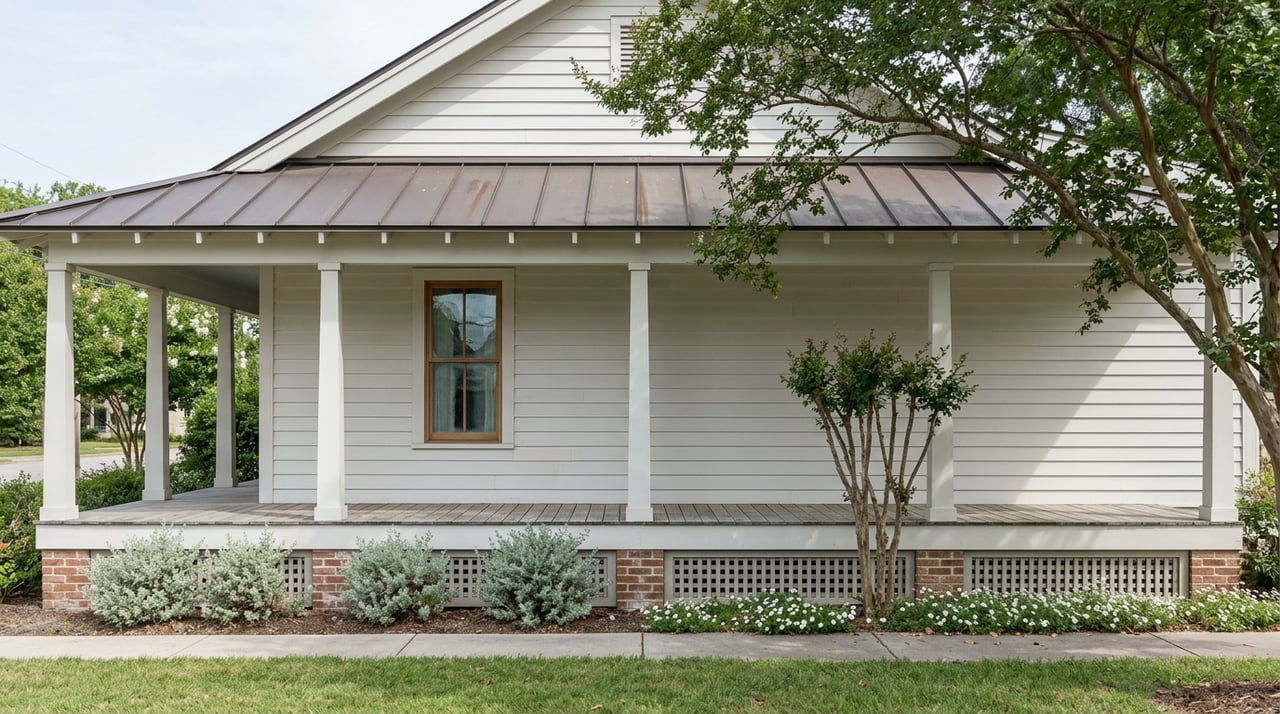
The eighty- and hundred-year-old homes near the square were built on pier-and-beam foundations, which fail slowly, from underneath, as the ground beneath the piers settles unevenly over decades. The post-tension slabs standard in McKinney's newer subdivisions fail differently, usually at a corner where fill dirt was compacted quickly during a fast build-out. Different failure mode, different repair, different cost.
| Historic pier-and-beam | Newer post-tension slab | |
|---|---|---|
| Typical failure pattern | Slow settlement under the floor | Corner drop over compacted fill |
| Starting repair cost | Around $3,900 | $360 to $650 per pier |
| Inspection focus | Crawlspace beams, joists, moisture barrier | Elevation survey, grading, drainage |
A pier-and-beam repair isn't necessarily more expensive in total. It depends on scope. But it's a different line item than what a slab-foundation buyer in Stonebridge Ranch or Trinity Falls budgets for, and it's easy to miss if your inspector treats every McKinney home the same way. Ask specifically whether your inspector has experience with pier-and-beam construction before you hire one for a downtown property.
Disclosure Isn't Optional, and It Isn't the Same as Restoration
Sellers sometimes assume that owning a historic home means they're on the hook to restore it before listing. They're not. The preservation guidelines apply to proposed changes, not to the condition a seller hands off. You can sell in current condition and let the buyer work through the COA process for whatever they plan to do next.
What sellers do have to do is disclose the designation. Historic status is a material fact because it limits what a new owner can change on the exterior, and that limitation affects value and usability the same way an easement or a deed restriction would. It belongs on the Seller's Disclosure Notice, and it's worth confirming through the title company that the designation is documented correctly, since a buyer who discovers restrictions after closing that weren't disclosed upfront has grounds to raise the issue.
What the Median Actually Buys You Right Now
As of July 2026, homes in Historical McKinney carried a median sale price in the neighborhood of $635,000 to $698,500, depending on the data pull, with active listings spanning from just under $400,000 to $1.85 million. That range is the whole story, and it's why the median alone is close to useless for this specific district.
A home at the low end of that range is very often a project: original systems, a foundation that hasn't been evaluated in years, and an owner who priced it to move quickly because the next buyer is going to spend real money and real time getting it where they want it. A home at the top of the range, the fully restored Victorian with county and state historic markers, has usually already been through the COA process for whatever work made it market-ready. You're not buying uncertainty at that price point. You're buying the fact that someone else already absorbed it.
The middle of the range is where the risk hides best. A "move-in ready" listing can still be sitting on an original pier-and-beam foundation that simply hasn't shown symptoms yet, or on an addition that was completed years ago without ever going through the city's process, which becomes the new owner's problem to resolve if it ever comes up during a future sale or permit request.
Before You Write the Offer
A few questions are worth answering before you're inside an option period with a clock running.
- Confirm the property actually sits inside the Historic Overlay District boundary using the city's interactive map. Being near the square isn't the same as being inside the district.
- Ask your agent to pull any COA history on the property. A past addition or exterior change that never went through the process is a liability you're inheriting, not a bonus.
- If you're planning renovations, sketch the scope before you write the offer and ask whether it's likely to clear at staff level or require a board hearing. That answer changes your timeline by weeks, sometimes a full month.
- Hire an inspector who can speak specifically to pier-and-beam construction if you're looking at one of the older homes near the square. A generalist slab inspection checklist will miss things.
- If you're selling, get the historic designation documented and disclosed early rather than leaving it for a buyer's attorney to flag during option period.
A Few Questions Worth Asking Before You Sign
Does painting my house require city approval? Generally no in the residential part of the district, though it's recommended you avoid painting previously unpainted brick, stone, or stucco, since that change is difficult to reverse.
Do I need a permit to replace a fence? Yes. New fences or changes to an existing fence's style, size, or location require a Certificate of Appropriateness in addition to the standard building permit, and height limits in the historic district are different from the rest of the city.
Can I put solar panels on a historic home? Yes. The Historic Preservation Office will work with you on placement so the panels don't disrupt the street-facing view of the home.
The Historic Overlay District is a genuine asset for the homes inside it. It's the reason the streets around McKinney Square still look the way they do, and it's a large part of why buyers pay a premium to live two blocks from Chestnut Square instead of two miles away in a subdivision. But an asset with rules attached is different from a house with no rules at all, and pricing that difference correctly, on both sides of the transaction, is where a local agent earns their fee.
If you're weighing a historic McKinney property, whether you're the one buying the project or the one selling it, The Luxe Global Group can walk the COA history, the foundation type, and the disclosure paperwork with you before you're locked into a contract. Book a complimentary consultation and get the full picture before you write the offer.